Chiara Semenzin
Postdoctoral Researcher, Earth Species Project
AI for animal communication • Computational linguistics • Bioacoustics
My research explores how artificial intelligence can help decipher the structure and meaning of non-human communication systems.
After earning degrees in Linguistics (MA) and Informatics & Cognitive Science (MSc) from the University of Edinburgh, I now work at the intersection of language, computation, and biology — studying how intelligence and communication emerge across species and representations.
Currently, I am a Postdoctoral Researcher at the Earth Species Project, where I develop machine learning and information-theoretic methods to analyze animal communication and explore how AI models can help uncover patterns and structure in non-human vocal systems.
My work focuses on pushing the limits of speech and representation learning models beyond the human domain, with the broader goal of understanding how communication systems evolve and how artificial intelligence can help interpret them.
Beyond research, I am passionate about science communication and interdisciplinary dialogue, building bridges between linguistics, artificial intelligence, and the natural world.
News
- 🌍 23/02/2026 Joined Earth Species Project as a postdoc, working on AI and animal communication!
- 🔬 10/10/2025 Started as a CNRS postdoctoral researcher at Institut de Biologie de l'ENS
- 🎓 30/9/2025 Successfully defended my PhD!
- 🎤 28/2/2025 I presented my latest work at the Embedded Days Conference in Paris
- 🔬 14/10/2024 Shared my work on dolphins with the general public at the Fête de la Science in Paris!
- 🎓 25/10/2024 Held a guest lecture at University of Siena about Generative AI and why it can make our life better
- 🐬 Presented my work on dolphin communication at the Non-Human Communication Workshop III by CETI in Berkeley
Selected Publications
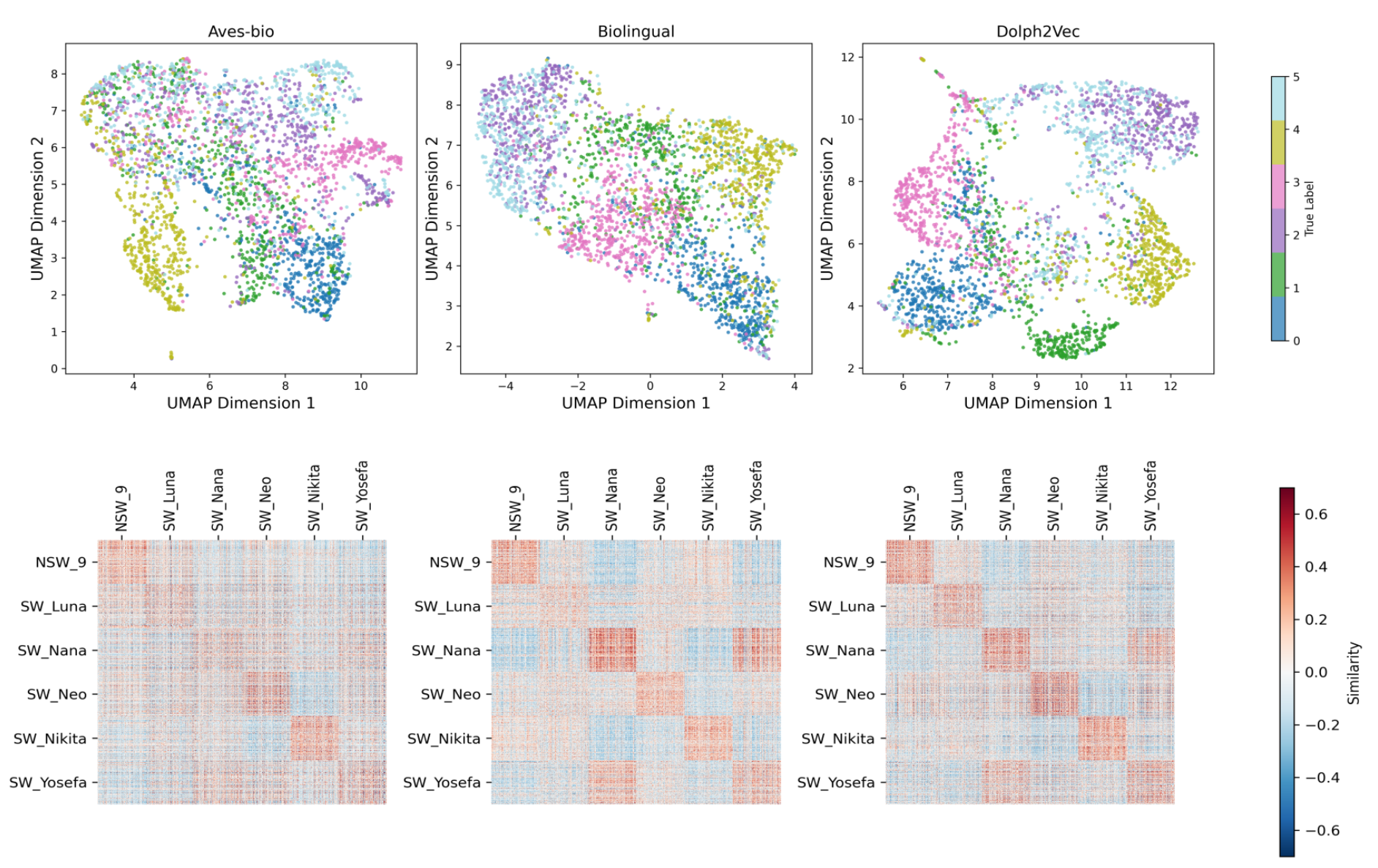
Dolph2Vec embeddings capture biologically meaningful categories
Semenzin, C., Mustun, F., Dessì, R., Emanuelli, A., Orhan, P., Lakretz, Y., de Polavieja, G., Sumbre, G. (2025). Dolph2Vec: Self-Supervised Representations of Dolphin Vocalizations. Preprint
Dolph2Vec, self-supervised, species-specific model significantly outperforms general-purpose baselines in detection and classification. The learned embeddings capture interpretable dolphin whistle categories, enabling fine-grained analysis of communication patterns.
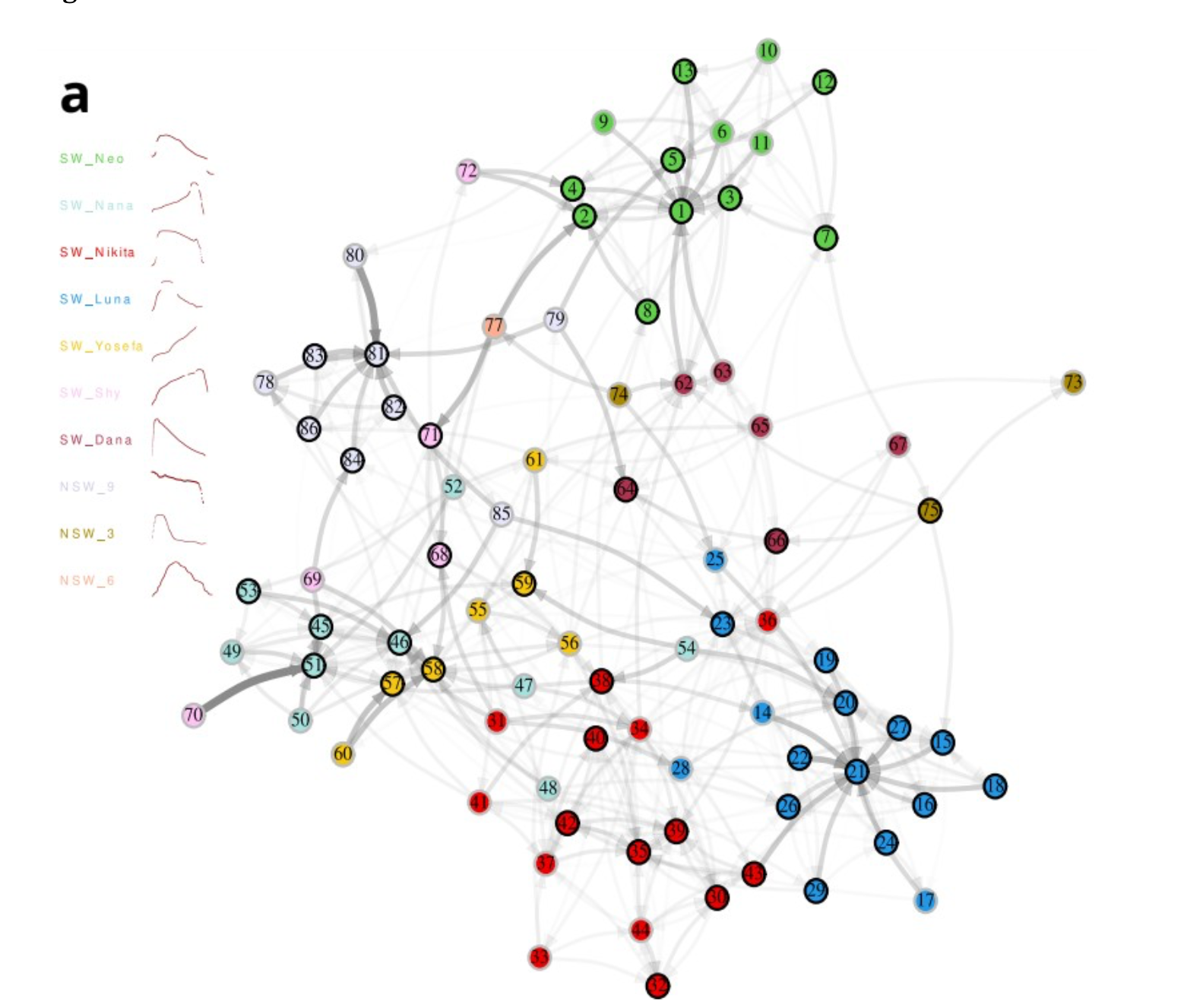
Visualization of social acoustic interactions in a pod of dolphins
Mustun, F.*, Semenzin, C.*, Rance, D., Marachlian, E., Guillerm, Z., Mancini, A., Bouaziz, I., Fleck, E., Shashar, N., de Polavieja, G., Sumbre, G. (2024). Whistle variability and social acoustic interactions in bottlenose dolphins. In Review
Signature whistles vary systematically, forming distinct sub-categories that mirror social structures and serve different communicative roles. Remarkably, dolphins were also observed producing the signature whistles of their deceased mothers—a behavior previously seen only in humans.
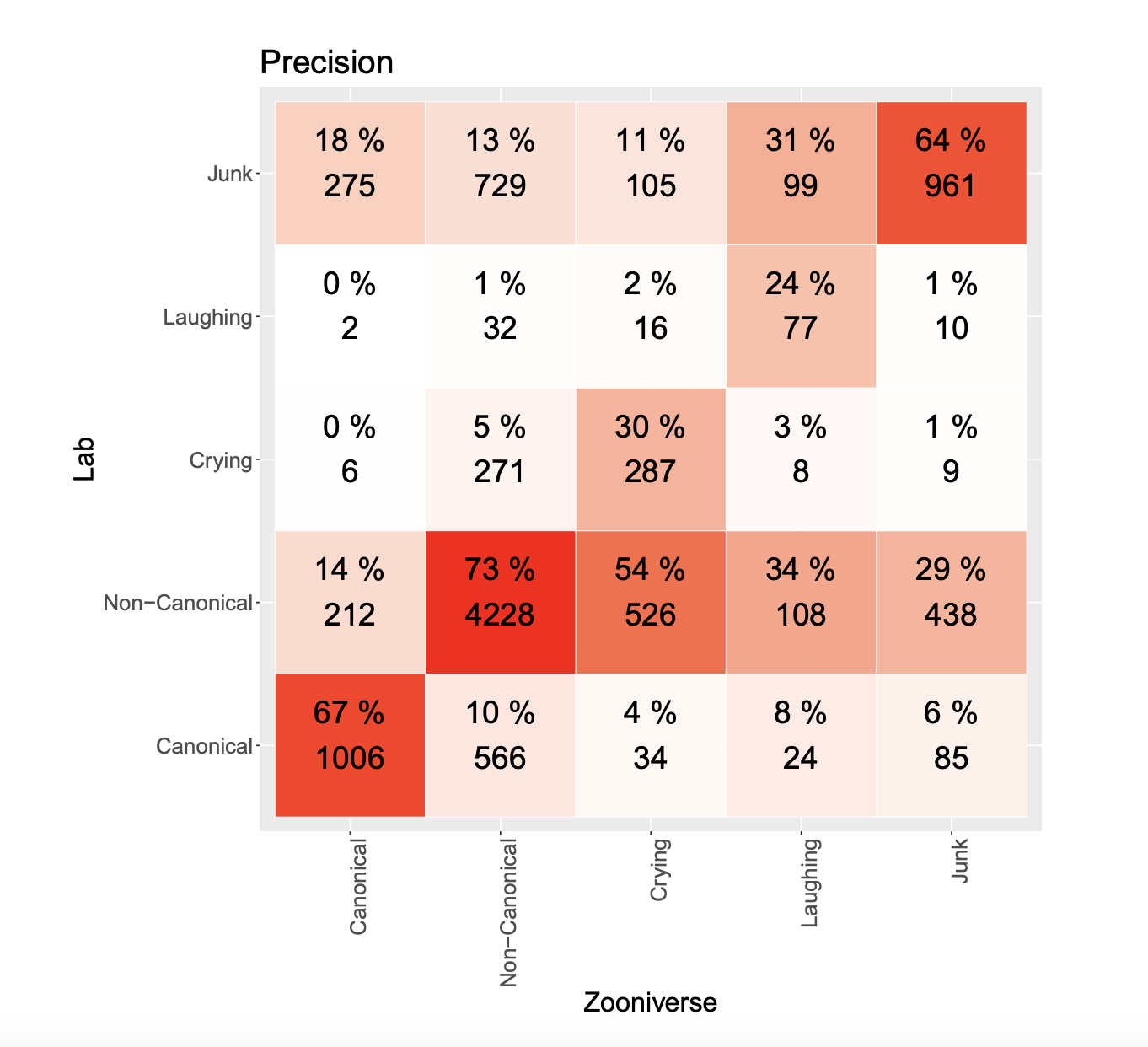
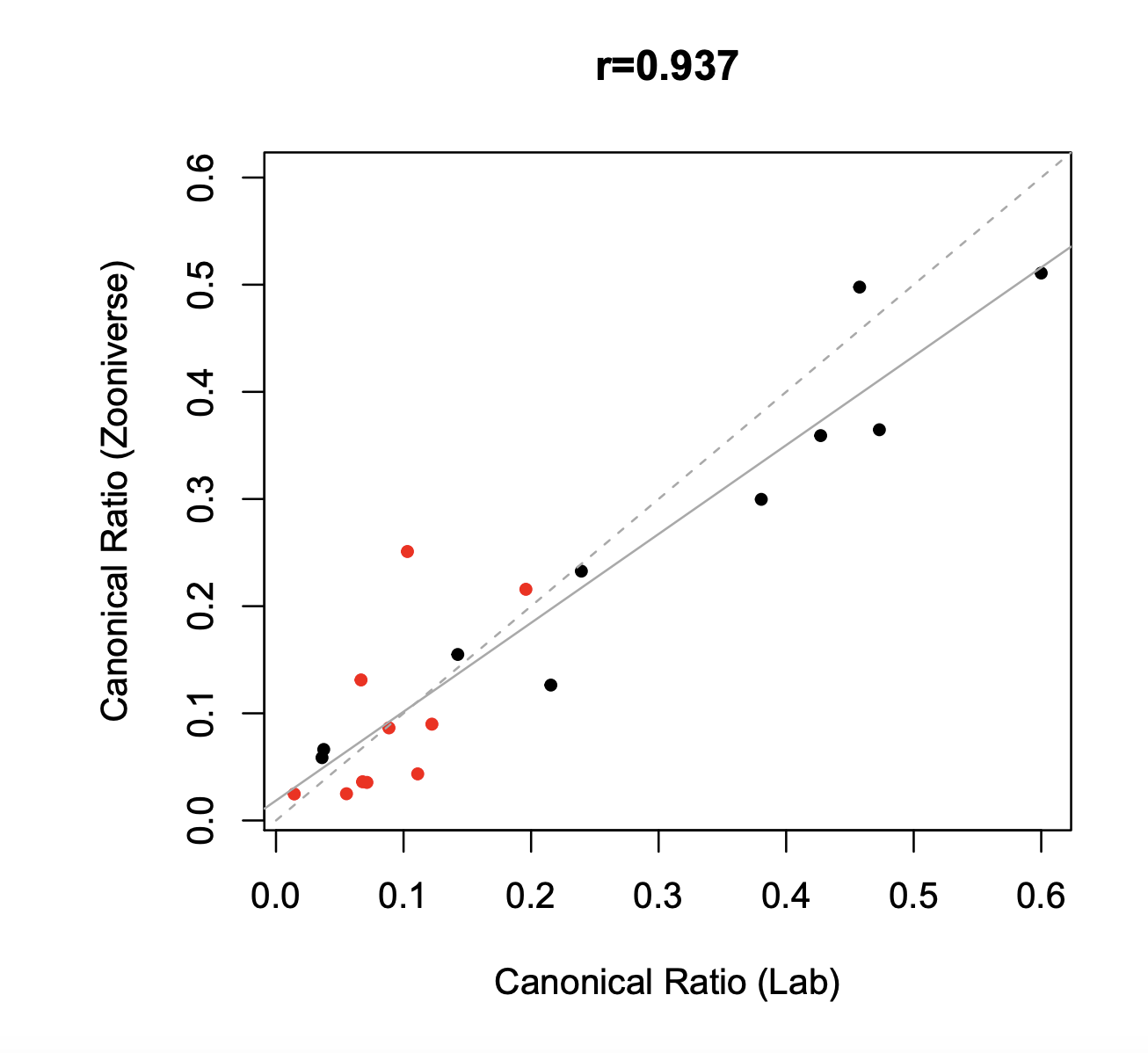
Citizen science annotation VS Gold standard
Semenzin, C., Hamrick, L., Seidl, A., Kelleher, B., Cristia, A. (2021). Towards large-scale data annotation of audio from wearables: validating zooniverse annotations of infant vocalization types. IEEE Spoken Language Technology Workshop (SLT), pp. 1079–1085.
Classification of individual vocalizations on Zooniverse was overall moderately accurate compared to the laboratory gold standard.
Vocalization patterns in children
Semenzin, C., Hamrick, L., Seidl, A., Kelleher, B.L., Cristia, A. (2021). Describing vocalizations in young children: A big data approach through citizen science annotation. Journal of Speech, Language, and Hearing Research.
A large dataset of infant speech was uploaded on a citizen science platform. The same data were annotated in the laboratory by highly trained annotators. An analysis of descriptors defined at the level of individuals found strong correlations between descriptors derived from Zooniverse versus laboratory annotations.
Academic Awards & Honors
-
Marie Sklodowska-Curie Fellowship — AI4Science (2021)
Prestigious EU fellowship for doctoral research in AI applications to biological sciences -
Edinburgh University Rea Marmarinou Award — Cognitive Science (July 2018)
Awarded for excellence in Cognitive Science research -
School of Informatics Travel Award — University of Edinburgh (May 2019)
Support for international conference participation
Invited Talks & Presentations
- 2025 Embed Days Colloquium, Paris
- 2025 EviL Meeting, COLT, Universitat Pompeu Fabra, Barcelona
- 2024 REST-CL Workshop on Computational Linguistics, Tarragona
- 2024 AI Systems for Research Seminar, University of Siena
- 2024 CETI Workshop: Non-Human Communication III
- 2024 LINGUAE Seminar Series, École Normale Supérieure
- 2023-25 Neurosection Department Seminar, Institut de Biologie, ENS Paris
- 2023 PSL Doctoral Conference
- 2022 AI4Science Conference, Nice
- 2022 PROTOLANG (Poster)
- 2022 Neuroethology (Poster)
Education
-
2021 - Present
École Normale Supérieure, Paris, France
Marie Sklodowska-Curie PhD Fellow -
2017 - 2019
The University of Edinburgh, United Kingdom
MSc in Informatics and Cognitive Science -
2013 - 2017
The University of Edinburgh, United Kingdom
Master of Arts with Honours in Linguistics
Connect with Me


